• image
  • image
  • image
  • image
  • image
  • image
  • image
  • image
  • image
  • image
  • image
  • image
  • image
  • image
  • image
  • image

We show you Berlin's Art & Architecture off the beaten track

We believe Berlin's creative energy can best be explored in its niches. Be it unconventional art spaces or inventive architecture, it’s our passion to explore the uncommon perspectives of our city and we want to share it.

NICHE Berlin offers private personalized art and architecture tours that will get you there. In an authentic Berlin experience, we will show you the city's hard-to-find, innovative architecture gems and experimental, emerging art spaces.

Want to comprehend Berlin's latest artistic tendencies, discover its newest hot spots or meet the people behind the scenes? Look no further.

Art
in Berlin

Berlin has much more to offer than the well-advertised museums and reputable galleries. Artists initiatives, non-commercial art spaces and unusual galleries with inventive approaches make Berlin such a special art metropolis.

NICHE Berlin offers private guided tours to these unconventional locations. It showcases art that has yet to be discovered and elucidates its context.

Architecture
in Berlin

Berlin's architectural landscape is made up of much more than historical buildings and profit driven construction projects. The creative re-usage of existing structures and vacant spaces leads to an astonishing and intelligent mix of architecture that makes the city so distinctive.

NICHE Berlin puts together individual viewings to the most fascinating architectural projects and explores their histories and contexts.

Auf deutsch bitte

Book a Tour

Our Services

niche
Academic
& Corporate Tours

We offer individual arrangements for corporate clients or student groups. We offer a complete service package including:

  • Individually planned tours ranging from half-day to several days for groups of up to 150 people
  • organization of transport
  • selection and booking of restaurants & further recommendations for your stay in Berlin
Request a quote

niche
Private Tours

Get personal insights into what currently happens in Berlin's niches. Tell us what you are especially interested in and we will develop a customized tour – just for you and your friends. You will meet some of the protagonists of the art & architecture scene.

We can guide you in English, deutsch, français, italiano or español.

Duration 2 – 2:30h
Capacity 1 – 6 pax
200€ per Tour
Gift voucher available
Book a private tour

niche
Expertise
& Consulting

We offer our unique expertise to institutions, companies, publishing houses but also collectors seeking insights in Berlin's contemporary art scene or architectural landscape. You can book us as speakers or advisers for conferences and conventions, publications, construction projects, exhibitions projects or art acquisitions.

Some of our expertise projects:

  • Zeit Online

    Berlin Culture Blog "Filter"

  • Allied Museum Berlin

    Talk "Field Station Berlin, Teufelsberg – Documentation of a potential architectural monument"

  • Node Curatorial Center

    Talk: "Introduction to Berlin’s art scene"


  • Nokia

    Virtual Tour "GDR Architecture"

Contact us
back

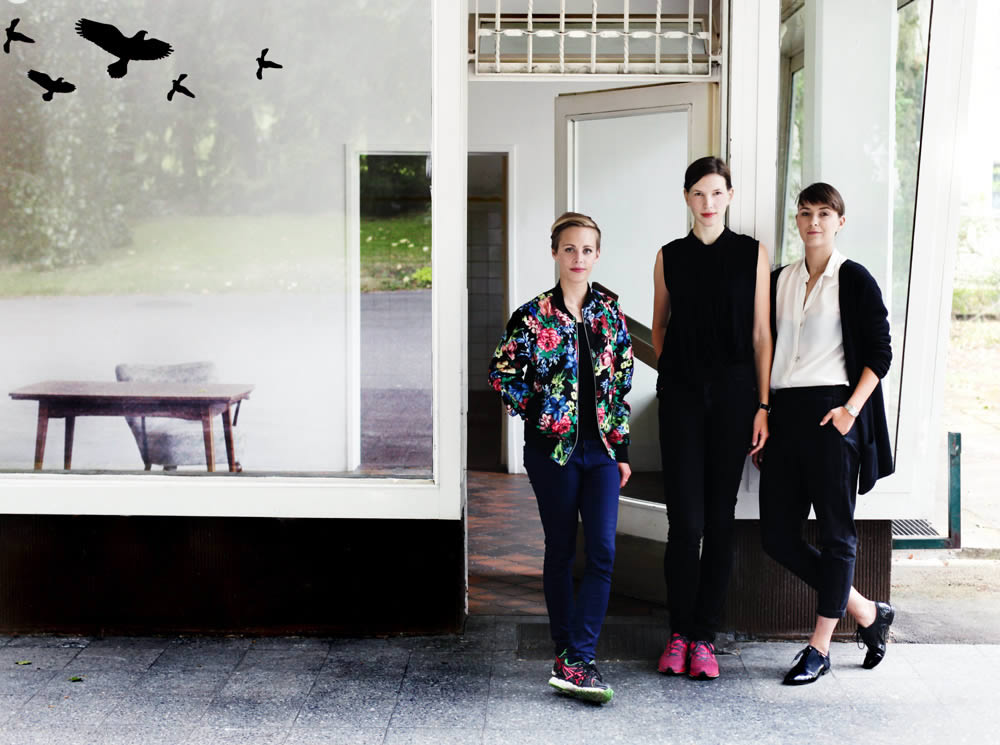
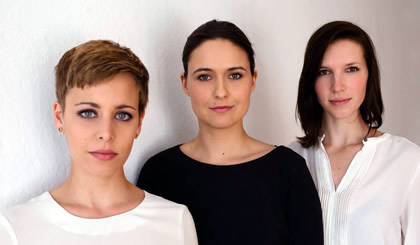
The NICHE founders The NICHE founders

About us

Since May 2009 NICHE Art and Architecture Tours has been opening up new Berlin perspectives for art and architecture lovers from all over the world NICHE Berlin is the brainchild of Katharina Beckmann (heritage conservation & architecture), Stefanie Gerke & Nele Heinevetter (both art history).

If you would like to work with us as a guide, please check our Facebook page for openings or just send us your CV.

Today Niche Berlin employs a multidisciplinary team of art historians, architects, heritage conservators and artists:

  • Simone Bogner
  • Hannah Hallermann
  • Christina Landbrecht
  • Gregor Quack
  • Franziska Solte
  • Sandra Teitge

Review
& Press

„Madame-Redakteur Rüdiger von Naso und die Fotografin Silke Weinsheimer folgten Niche an Orte, an denen jungen Künstlern eine erste Chance gegeben wird, und zu einer Architektur, die man erst einmal entdecken muss. Und waren hingerissen von Charme, Intelligenz und (Insider-)Wissen der drei, die perfekt moderierten, auf jede Frage eine Antwort wussten und anregende Begegnungen ermöglichten. Spielerisch und mit Humor“
Madame (Juli 2010) "Lieber ein bißchen intimer"

niche art and architecture tours featured in madame magazine

„If you want to find your way around Berlin's ever growing landscape of off-spaces, alternative locations and architectural pecularities, Niche Art & Architecture Tours is for you.“
Sleek (Winter 2010/2011) "Berlin People"

niche art and architecture tours featured in sleek magazine

„We had the best time, we really enjoyed the tour and felt like we got to see a part of the city and part of the cities culture we would never otherwise see.“
N. Prince

„Die Drei-Frauen-Firma Niche bietet Rundgänge durch Berliner Galerien an. Sogar auf Italienisch“
ZEITMagazin (Januar 2010) "Heiter bis Glücklich“

niche art and architecture tours featured in zeit magazine

„Stefanie Gerke, Nele Heinevetter and Katharina Beckmann had a winning idea when they started their art and architecture tours of Berlin.“
Lufthansa Magazin (Oktober 2010)

niche art and architecture tours featured in lufthansa magazine

„Die Berliner Kunstszene jenseits des Mainstreams steckt voller ungeborgener Schätze. Sie zu entdecken und die Begeisterung dafür zu teilen, darum geht es bei Niche.“
Zitty (Dezember 2009) "Pulsmesser"

niche art and architecture tours featured in zitty magazine

„Les trois jeunes Berlinoises de Niche proposent un tour à la découverte des endroits où sont exposés de jeunes artistes - encore - méconnus.“
Le Figaro Magazin (Mai 2011) "Berlin, arts majeurs"

„We just wanted to thank you for taking us on the tour yesterday, we both really enjoyed it. I learned a lot about the DDR styles and architectural details thanks to your research and information.“
K. Sanderson


Partners &
Supporters

Friends, companies & places who support us and make NICHE possible.
  • artberlincontemporary
  • Soho House Berlin
  • Berlinische Gallerie
  • Berlin Independents Guide

niche Blog

If you have pictures of a NICHE Tour we would love to post them! Please send them to contact@nicheberlin.de

    Niche Berlin´s Guide to Gallery Weekend for Stil in Berlin

    Niche Berlin´s Guide to Gallery Weekend for Stil in Berlin

    Photo: Mary Scherpe for Stil in Berlin Of course you can spend your weekend squeezing in with hordes of people at the major galleries – we’ll be there, too. But there are many other fun things happening this week that ought not to be missed - take a look which exhibitions we’re most curious about… For the playful:Hunting down art: Berlin-based artist Renata Kaminska hosts the annual Bel Etage-project, which takes place around Rosa-Luxemburg Platz. This year’s group intervention with artists such as Kinga Kielzynska, Martin Kohout, Antje Majewski and Ignacio Uriarte is titled In The Shadow Of The Sun and will be on display at Babylon cinema and Kunstverein at L40. (The Ordnungsamt didn’t quite appreciate last year’s site-specific installations and had them “dismantled” quite quickly – we loved them though. And we’re curious to see what happens this year.) Kunstverein at L-40 & Babylon, Linienstraße 40 & Rosa-Luxemburg-Platz, 10178 Berlin, Opening: 26.4., 6 pm Artists exhibiting their students’ results: For the project Neue Klasse artists Christian Jankowski and Gregor Schneider curate the works of their mutual students. The selected installation works, videos, sculptures and performances will be on display at Wiensowski & Harbord this weekend. We like the idea, let’s see about the art. Wiensowski & Harbord, Lützowstrasse 32, 10785 Berlin, Opening: 25.4., 7 pm For the nerds: Machine aesthetics and industrial sound: Tokyo-based artist and muscian Ujino Muneteru gives new life to discarded technology by constructing odd apparatuses and sound landscapes. For his exhibition duet at PSM he samples his robot spirits with traditional elements of Noh theatre. Sounds weirdly intriguing to us. PSM, Strassburger Straße 6-8, 10405 Berlin, Opening: 27.4.2012, 6 pm Exploring the unchallenged possibilities of e-waste: The project ReFunct Media #4 by Benjamin Gaulon, Niklas Roy, Karl Klomp, Tom Verbruggen and Gijs Gieskes hosted by LEAP consists of multi-media installations with various digital and analogue media players and receivers, which are misused and re-contextualized in order to provoke thoughts about planned obsolescence and sustainable design strategies. However, there are plenty of gadgets to play around with! LEAP - Lab for Electronic Arts and Performance, (Berlin Carré, first floor), Karl-Liebknecht-Straße 13, 10178 Berlin For the socialites: Two (more or less) must-see openings next week: Michael Sailstorfer at Berlinische Galerie and Roman Ondák at Deutsche Guggenheim, both prize-winning artists, open their respective shows: Local hero Sailstorfer presents Forst, which includes a tree installation in BG as well as his work Black Forest consisting in the life-stream of a blackened square of forest as it slowly regresses to its natural state. Roman Ondák’s project do not walk outside this area promises to draw the spectator into an imaginary journey questioning the arbitrary conventions of the art industry that – for instance – often draw a fine line between object and fetish. Berlinische Galerie, Alte Jakobstraße 124-128, 10969 Berlin, Opening: 25.4., 6 pmDeutsche Guggenheim, Unter den Linden 13-15, 10119 Opening: 25.4., 6 pm For the thinkers: Articulated: CHERT presents London based artist Lucy Coggle (1981) with her show A.A.A.A, including drawings, a video and the book An Argument Against A/R/T/I/C/U/L/A/T/I/O/N – together forming a monologue about language, its delimitations, and its possibilities for manipulation or divulgence. We’re curious, as the artists of Chert usually have quite some humour. Chert, Skalitzerstr. 68 10997 Berlin, Opening: 27.4., 6 pmArt of story-telling: Tanya Leighton shows New York-based artist Alejandro Cesarco (1975) with The Early Years an investigation of the ways we deal with our own story, where the pieces - ranging from unwritten books to textual communication - explore various manifestations of personal narratives. And yes, we admittedly like that conceptual touch…Tanya Leighton, Kurfürstenstraße 156, 10785 Berlin, Opening: 27.4., 6 pm For those who like it detailed: Taking a breath: Johnen Galerie presents Glasgow-based artist Martin Boye (*1967). In Praise of Shadows features new works of 2011’s Turner-prize winner that refer once again to architecture and modern design, questioning the respective utopian potential. His objects and installations fuse architecture and nature into melancholic pairs. Clear, beautiful and smart: relaxing, we say!Johnen Galerie, Marienstraße 10, 10117 Berlin, Opening: 27.4., 6 pm Some like it weird – just like us: At KOW Berlin-based artist, writer, and curator Alice Creischer (1960) presents the multipart installation The Establishment of Matters of Fact on the regime of the factual, examining the conditions of knowledge-production and dissemination: Family trees, scientific classifications, and genetic codes of lab mice serve as subjects for Creischer’s various images, collages, objects and encoded poems, while the central piece refers to a vacuum pump, which scientist Robert Boyle used in the 1660’s to prove the existence of a vacuum – by suffocating lab mice.KOW, Brunnenstraße 9, 10119 Berlin, Opening: 27.4., 6 pm Go have fun! Niche Berlin for Stil in Berlin

    more
    California in Wedding

    California in Wedding

    Nothing new; the art space Essays & Observations has always been dedicated to a theoretic angle on art production and reception. But their current show is brilliant: Another Decade of California Color: Suitable for Framing questions the mechanisms of canonization. In response to the survey show Pacific Standard Time on view at Martin Gropius Bau, the project space invited Galerie C & V gallery to present their project “the missing i”. It displays the findings of a 3-year-long investigation prompted by C & V’s discovery of a fake exhibition catalogue. The original had been produced for the group show A Decade of California Color (1970) at Pace Gallery in New York, an exhibition intended to present thirteen artists such as Larry Bell, Robert Irwin, John McCracken and Ed Ruscha to the New York audience. Its catalogue consisted of a simple wraparound folder with loose sheets – one for every artist. Turned out that Galerie C & V possessed a manipulated copy, in which a mysterious ‘Charles Arnold’ replaced the artist Charles Arnoldi. Consequently, Galerie C & V dedicated their energy to resolving the questions provoked by the odd discovery, such as: who is the fake artist – visible in a portrait on the forged sheet – and what was the fate of his purportedly exhibited art work? And why choose to imitate Charles Arnoldi rather than one of the other twelve exhibiting artists?  Following a presentation of some core evidence of the inquiry in the first room, the second contains nothing but the “re”-construction of the artwork depicted on the fake catalogue sheet: C & V commissioned its production in LA by Jack Brogan’s studio, fabricant of many emblematic Californian pieces since the 1960’s. And while the exhibition title “Suitable for Framing” references the concept of artistic value, the piece itself also alludes to the exhibition currently at the Martin Gropius Bau – an attempt at an historic survey of artistic production in LA from 1950-1980 (with way too many “historical documents” – some suggesting that German art dealers had discovered Californian art significantly earlier than New York). Either way, the show at E & O is – at least intellectually – far more interesting. And we could tell we’re not the only fans; Larry Bell and entourage had big smiles on their faces when leaving the tiny project space. They had come to Berlin for the Pacific Standard Time opening. Another Decade of California Color: Suitable for framing is on view until next Saturday, 14.4. at Essays & Observations, Maxstraße 1, 13347 Berlin.

    more
    Specimen - Philip Topolovac

    Specimen - Philip Topolovac

    by Hendrik Lakeberg Es liegt eine Kälte in den Arbeiten von Philip Topolovac. Geschmolzenes Glas, das während der Bombenangriffe am Ende des zweiten Weltkriegs im Berliner Schutt zurück blieb, präsentiert er auf schlichten weißen Platten wie antike Schmuckstücke in einem anthropologischen Museum. Gewöhnliche Sandhügel fotografiert er als handele es sich dabei um ferne Gebirgszüge – bis man die Bierflaschen entdeckt, die jemand in sie geworfen hat. Von eben jenen Sandhügeln erstellt Topolovac in der Serie „Landschaftsformen“ Abformungen aus Fiberglas als materielles Negativ der Natur. In der Objekt-Serie „Modulite“ erfindet Topolovac zwecklose technologische Gebilde, von denen einige partiell zerstört sind, als wären sie die Kollateralschäden der Klonkriege in Star Wars – Ruinen einer Sci-Fi-Welt. Philip Topolovac Werk besteht im Kern aus drei zentralen Motiven: In seinen Objekten und Installationen liegt immer eine Beschäftigung mit der Konstruktion von kultureller Identität. Es ist zweitens die Landschaft, die zu dieser Identitätsbildung beiträgt und drittens finden sich in seinen Arbeiten häufig Verweise auf die Epoche der Romantik. Die Romantiker verklärten die Landschaft, indem sie sie zu einer Sehnsuchtsmetapher erhoben. Die Entfremdung von der Natur und die Suche nach einer  Identität, nach der Transzendenz des Göttlichem in der Natur malte ihre Bilder. Landschaft wird zur Konstruktion und zum Ausdruck der psychischen Verfasstheit des Künstlers. Spätestens seit dem späten 19. Jahrhundert wird der Topos der Berglandschaft zu einem Klischee, im 20. Jahrhundert zum Kitsch – kein ernstzunehmender Künstler traut sich nach dem Ende von Faschismus und Weltkrieg, Natur darzustellen wie Caspar David Friedrich oder William Turner. In der durch und durch rationalisierten Welt des Spätkapitalismus betrachtet man Berge anders. Doch auch wenn der Umweltschützer, der Geologe, der Unternehmer, der Skifahrer oder der Wanderer jeweils etwas komplett verschiedenes in ihr sieht, trägt diese Landschaft weiterhin zur Identitätsbildung bei, obwohl es sich bei ihr im Endeffekt um nichts anderes handelt als eine Anhäufung von Gestein – für sich genommen eine Banalität. Dieses Wechselspiel von Verklärung und nüchterner Analyse durchzieht auch die Arbeit „Bodenproben“. Indem er die geschmolzenen Glasstücke präsentiert als wären sie seltene historische Artefakte – oder besser: wie ein Insektenforscher rare Spezies seiner Sammlung –, dreht Topolovac die Konstruktion von Natur vor dem Hintergrund nationaler Identitätsbildung um. Die Spuren des Krieges sind in ihnen sichtbar. Dadurch invertiert er das pathetische, an die Romantik angelehnte Bild von Natur und Landschaft im Faschismus und greift gleichzeitig das Motiv der Ruine auf. Es steht hier nicht mehr stellvertretend für die Sehnsucht nach dem Sublimen in der Landschaft, sondern die Erinnerung an den Schrecken des Faschismus und des Zweiten Weltkriegs, zu welcher der Sehnsuchtstopos der Romantik beigetragen hat. In der Werkgruppe „Modulite“ transportiert Philip Topolovac das Landschaftsmotiv in einen technologischen Bedeutungszusammenhang. Dahinter steht die Annahme, dass Identität heute nicht mehr allein als Folge einer lokalen Herkunft oder ähnlichem entsteht, sondern als Konsequenz eines a prioris, in dem Natur, Kultur und Technik untrennbar miteinander verwoben sind. Die Berge und die Maschinen eint, dass sie nichts anderes als materielle Formationen sind – aus Gestein und im Fall der Maschinen aus Metall und Kunststoff. Der Funktionalismus des Maschinellen wird kulturell überhöht. Deshalb spielt Topolovac in seinen modellhaften Objekten auch auf die Ästhetik von Raumschiffen in Science-Fiction-Filmen an. Technik, also Computer, Maschinen oder auch Lichtmaschinen von Autos, die er in einer Fotoserie porträtiert, sind für den Laien eine ähnlich undurchdringliche Tatsache wie die Weite und die beeindruckende Größe eines Gebirgsmassivs. Ihre Komplexität, die industrielle Formsprache, die sie in nahezu endlosen ästhetischen Varianten hervorbringt, und die potentiell endlosen Möglichkeiten, die sie zu versprechen scheint: Topolovac deutet an, dass auch in Technologie Erhabenheit stecken kann.   Darüber hinaus liegt in den „Moduliten“ ein ironischer Verweis auf die „Architektone“ von Kasimir Malewitsch. Auch bei ihnen handelt es sich um freie Figurationen, die architektonische Strukturen andeuten, aber doch funktionslose Objekte bleiben. Ein zentrales Stück der Ausstellung und Teil der „Modulite“ ist der Nachbau des „Wolkenbügels“ von El Lissitzky, ein utopischer und radikal moderner Entwurf für ein Hochhaus, mit dem der russische Avantgardist 1924 den rückwärtsgewandten Historismus der amerikanischen Wolkenkratzer kritisierte.  Malewitschs und El Lissitzkys Arbeiten entstanden in der Tradition eines optimistischen Konstruktivismus, der die Technologie und die neuen Formen, die sie hervorgebracht hatte, als Naturersatz und als Fundus neuer Ausdrucksmöglichkeiten für die Kunst verstand. Bei Topolovacs „Moduliten“ findet man schon im Namen – eine Wortschöpfung aus Modul und Monolith – eine Anspielung auf den Zusammenhang aus Technik und Natur und nicht allein die Überwindung der Natur wie bei Malewitsch und El Lissitzky. Durch die Zerstörung der Objekte, ihre verletzliche Materialität macht Topolovac das Motiv der Ruine erneut zum Thema. Es liegt eine post-technologische Melancholie in diesen Arbeiten, die man fast wieder als romantisch bezeichnen könnte. Das Erhabene, das er in den Sandhügeln oder dem geschmolzenen Glas dekonstruiert hat, schleicht sich gewissermaßen durch die Hintertür wieder ein. Verstärkt wird es in der Objekt-Serie „Erdbeobachtungssatelliten“, für die Topolovac unter anderem den Google Earth Satelliten als Modell nachgebaut hat. Der technologische Blick aus dem Weltraum auf die Landschaft und die Erkenntnis, die die Bilder des Satelliten vermitteln, kehrt den Blick der Romantiker um. Es ist nicht mehr die unfassbare Größe der Natur, die sie zeigen, sondern die Kleinheit der Welt angesichts ihrer gnadenlosen technologischen Durchdringung, die kein Geheimnis, keinen blinden Fleck zurücklässt. Für romantische Erhabenheit ist die Erde zu klein geworden. Doch Philip Topolovac untersucht in seinen Arbeiten nicht nur die Spuren des Systems Romantik in Kunstgeschichte und Gegenwart. Würde man sein Werk in einem Gedanken zusammenfassen so könnte man sagen, dass er sich mit dem fortwährenden und verzweifelten Bemühen der Kunst beschäftigt, nach der Moderne einen zeitgemäßen Ausdruck für das Sublime zu finden. Specimen - Philip TopolovacAtelierhof Kreuzberg Schleiermacherstraße 31-37 10961 Berlin

    more
    Need a rest?

    Need a rest?

    by Kate Dillman The days in Berlin are becoming longer and brighter, and spring seems right around the corner. If you’re in need of an escape, an adventure, or both, there’s a place on the outskirts of Berlin that should do the trick. The abandoned Grabowsee Sanatorium has a strange history and an even stranger present. The first thirty patients of the Grabowsee Sanatorium arrived in April of 1896 to receive treatment for tuberculosis but the beautiful, sprawling complex ceased operating after 1945. Afterwards the many decaying brick buildings were taken over by Soviet soldiers as a military hospital, and only truly abandoned in 1995. Grabowsee, though, seems like it’s been abandoned forever.  The walk to the sanatorium is an experience by itself. To arrive, you first follow a canal to an old bridge once used by trains. Following the tracks leads you into an imposing, shadowy forest of pines across the river. The tracks stop short right before the sanatorium itself, a haphazard collection of red brick buildings in various states of decay, arranged around a small lake. The buildings seem mostly intact from afar, and only upon closer inspection do the missing windowpanes, slowly creeping vines, and loose roof shingles belie that impression. Pick a building and go exploring. You may find impossibly long hallways lined with debris and flaking paint and dozens of doorways, or a great hall still occupied by a lone grand piano, or perhaps a small round room bathed in sunlight from the absence of windows with a single couch in the center. Of course, Grabowsee has an eerie past, and the operating rooms and mazes of basement can exude a sinister air. On the other hand, Grabowsee can be serenely lovely, crumbling next to the lake in the sunlight amongst the forest. If you choose to conduct your own expedition here, keep time of day in mind, because Grabowsee’s aura can change as the sun sets. How to get to Grabowsee: Take the S1 or regional train to the Oranienburg station, and bring a bike if you have one. Ride or walk east on Bernauer Strasse until you reach the canal. Turn left and walk along the canal until you reach the blue iron bridge. Follow the train tracks across the canal until you reach the sanatorium. 

    more
more on nicheberlin.tumblr.com →

Contact us

Via Mail:


Via Interweb:


Imprint

Beckmann Gerke Heinevetter UG (haftungsbeschränkt)
Rheinsberger Str. 68
10115 Berlin
Germany

contact@nicheberlin.de
Tax ID: 34/221/51968
Tel: +49 176 66800232


Design & Site:
A++, Uli Schöberl

Portait & Tour Photography:
Mary Scherpe, Stil in Berlin

Thank you!